

Ad Dummying Software Workflow
Ad dummying software is designed to automate and manage the placement of advertisements within newspaper pages, ensuring that ads are positioned correctly according to client requirements, editorial constraints, and production deadlines. Traditionally, this process was manual, requiring layout staff to juggle advertiser requests, page geometry, and editorial flow. With the advent of specialized software, newspapers gained the ability to integrate advertising management systems directly with pagination tools like Adobe InDesign, dramatically reducing errors and saving time.
From a workflow perspective, ad dummying software acts as the bridge between advertising sales systems and production. Ads booked in the front-end system are imported into the dummying tool, which then generates a “flat plan” or page map. This plan dictates where ads will appear, taking into account premium positions, section-specific requests, and conflicts such as competing advertisers. Once finalized, the layout is exported into InDesign, where editorial teams can complete the page design. This integration ensures that advertising commitments are honored while maintaining editorial integrity.

AdForce: The Longstanding Standard
For many years, AdForce, originally developed by MEI and now maintained by Cognitive, has been the industry standard for ad dummying. AdForce (and its modern iteration, AdforceX) is trusted worldwide by newspapers, magazines, and catalog publishers. Its strengths include:
Automated issue planning: Ads are imported from any front-end system for accurate placement.
Flexible workflows: Users can choose between manual, semi-automated, or fully automated dummying.
Integration with InDesign: Ads are linked directly to their digital files, reducing production errors.
Deadline efficiency: The system is designed for “deadline-critical publishing,” ensuring that pages are ready on time.
AdForce’s dominance stems from its balance of automation and flexibility. It allows large newspapers to handle complex ad requests while still giving layout staff control when needed.
Layout 8000: The Premium Alternative
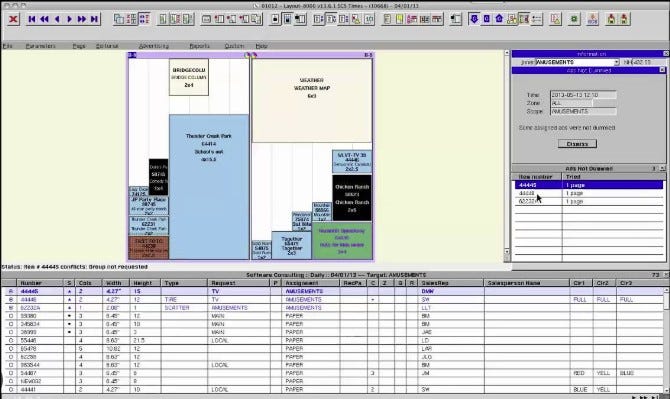
Another major player is Layout 8000, developed by Newspaper Systems. This product is considered the “next step up” from AdForce in both features and cost. Layout 8000 is particularly strong in handling complex advertiser demands, such as:
Section and zone requests: Ads can be placed according to geographic zones or specific sections.
Conflict management: Competing advertisers are automatically separated to avoid clashes.
Advanced positioning: Premium placements like front-page banners or section openers are managed seamlessly.
Integration with ad management systems: Acts as middleware between sales and production.
Because of its sophistication, Layout 8000 is often used by larger metropolitan newspapers with high ad volumes and complex layouts. Its cost, however, makes it less accessible to smaller publishers.
AdPlacer: A New Entrant for 2025
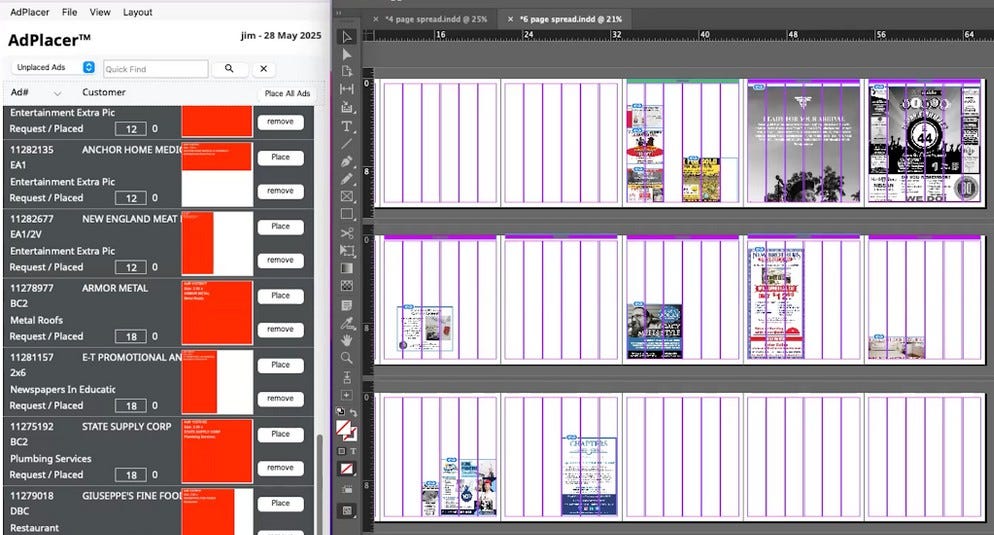
As of 2025, a new competitor has emerged: AdPlacer, developed by AdWorks Ad Management Solutions. Unlike AdForce and Layout 8000, AdPlacer is positioned as a cost-effective solution with fewer features but enough functionality to meet the needs of smaller newspapers.
Key strengths include:
Affordable pricing: Designed for small publishers with limited budgets.
Streamlined interface: Easier to learn and operate compared to more complex systems.
Core dummying features: Covers essential ad placement tasks without overwhelming users.
Integration with AdWorks: Works seamlessly with the company’s broader ad management suite.
For community newspapers or regional weeklies, AdPlacer represents a practical alternative. While it lacks the advanced conflict management and zone handling of Layout 8000, it provides enough automation to reduce manual work and ensure ads are placed correctly.
Industry Context and Competition
The newspaper industry has historically had limited competition in the ad dummying space. AdForce and Layout 8000 have commanded the majority of the market, leaving little room for new entrants. This lack of diversity has meant high costs and limited innovation. However, the rise of smaller, more affordable tools like AdPlacer signals a shift.
Smaller newspapers, which often operate on tight margins, benefit from software that balances functionality with affordability. As print advertising revenues decline industry-wide, cost-effective solutions become increasingly attractive. Moreover, the integration of dummying software with digital ad systems is becoming more important, as publishers seek unified workflows across print and online platforms.
Workflow Benefits of Dummying Software
Across all products, the benefits of ad dummying software in newspaper workflows are clear:
Error reduction: Automated placement minimizes mistakes in ad positioning.
Time savings: Layout staff spend less time manually juggling ads.
Advertiser satisfaction: Premium positions and requests are honored consistently.
Revenue optimization: Efficient layouts maximize available ad space.
Editorial balance: Ads are placed without disrupting editorial flow.
These advantages make dummying software indispensable for modern newspaper production, regardless of size.
Conclusion
Ad dummying software has evolved from niche tools into essential components of newspaper production. AdForce and Layout 8000 remain dominant, offering robust solutions for large publishers, while AdPlacer introduces a new era of affordability for smaller newspapers. As the industry continues to adapt to digital transformation and shrinking print revenues, the ability to streamline workflows and reduce costs will be critical. Dummying software, integrated with tools like InDesign, ensures that newspapers can meet advertiser demands while maintaining editorial quality, a balance that remains at the heart of successful publishing.
Subscribe today and turn hard choices into a competitive advantage!
Free/Paid Subscriptions.
Publishers News
Email: info@publishersnews.net
Web: publishersnews.net
Tel: 1-800-971-5030