

Publishers face a growing challenge in sending monthly billing emails: traditional providers like Gmail impose strict sending limits, forcing newspapers and magazines to batch invoices awkwardly, while Amazon SES emerges as a scalable alternative.
The Billing Bottleneck in Publishing
For newspapers and magazines, monthly billing is not just routine, it is the lifeblood of their operations. Advertising clients, subscribers, and distribution partners all rely on timely invoices to keep the financial ecosystem running smoothly. Yet, many publishers are discovering that their email providers are quietly undermining this critical process. When hundreds of invoices are queued for delivery, only a fraction may actually be sent. The culprit? sending limits, throttling rules, and content restrictions imposed by mainstream email services.

Google’s Gmail, for example, enforces daily caps on outgoing messages and recipient counts to protect its infrastructure and prevent abuse. A publisher attempting to send 300 invoices in one push may find that only 90 go through before the system halts. Worse, seemingly innocuous formatting choices, like using too many capital letters in subject lines can trigger spam filters, delaying or blocking delivery altogether. For an industry where cash flow depends on timely billing, these restrictions are more than inconvenient; they are existential threats.
Why Email Providers Impose Tight Controls
The rationale behind these restrictions is rooted in spam prevention and system integrity. Email providers must guard against malicious actors who send millions of unsolicited messages daily. By enforcing quotas, they reduce the risk of abuse, protect server performance, and maintain trust with global email networks. Gmail, for instance, limits standard accounts to around 500 recipients per day, while Google Workspace accounts may reach 2,000. Once these thresholds are exceeded, accounts can be temporarily suspended, leaving legitimate businesses stranded.
Providers also monitor sending behavior, sudden spikes in volume, repetitive content, or excessive capitalization are red flags. These heuristics are designed to filter out spam but often ensnare legitimate publishers. The irony is stark: while newspapers fight to maintain credibility in a digital age, their billing emails risk being treated like junk mail.
The Awkward Workaround: Batch Sending
Some publishers attempt to sidestep these limits by sending invoices in batches of 90 or fewer. Technically, this works, but it is inefficient and error prone. Staff must manually segment mailing lists, track which clients have received invoices, and repeat the process until all recipients are covered. For organizations with hundreds or thousands of clients, this is a logistical nightmare. Worse, staggered sending can create delays, leading to late payments and strained client relationships.
Batch sending also undermines professionalism. Clients receiving invoices at odd intervals may question the reliability of the publisher’s systems. In an industry where reputation is paramount, such hiccups can erode trust.
Amazon SES: A Scalable Solution
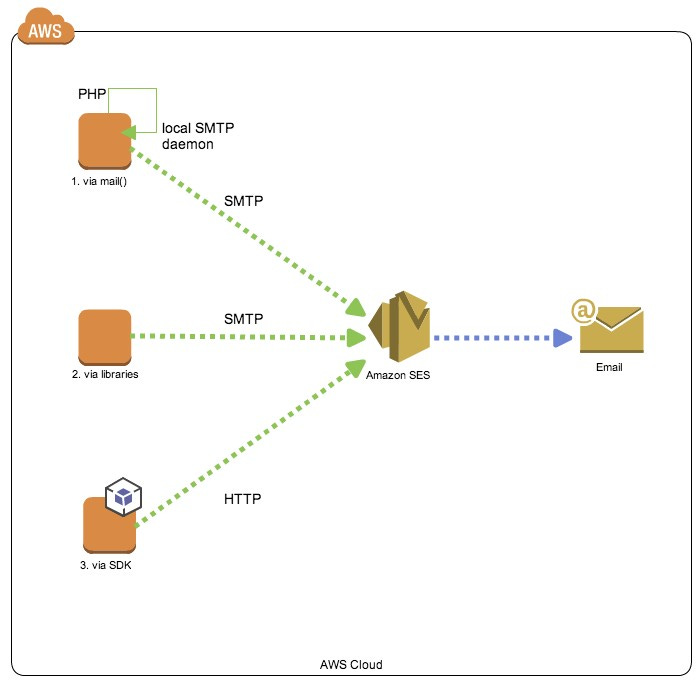
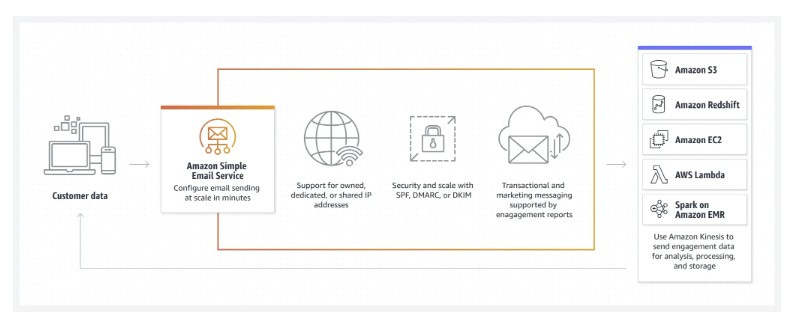
Enter Amazon Simple Email Service (SES), a cloud-based platform designed for high-volume, transactional email. Unlike Gmail, SES allows publishers to send thousands of emails per day with far fewer restrictions. While SES does impose quotas, these are adjustable based on account reputation and usage history. Publishers who maintain low bounce rates and complaint levels can see their limits automatically increased over time.
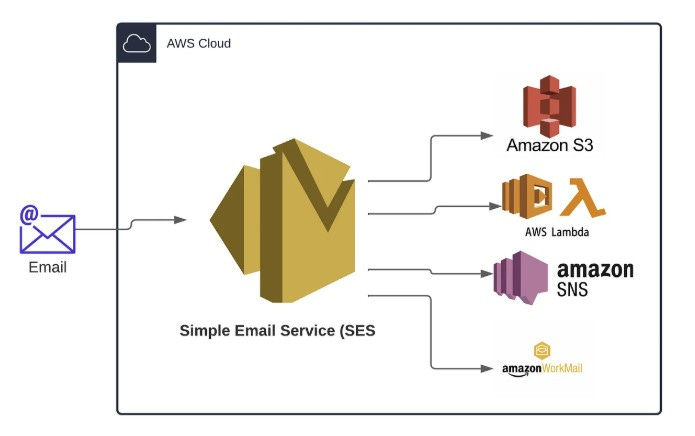
SES is particularly attractive because it is built for business-critical communication. Invoices, receipts, and notifications are treated as legitimate transactional traffic rather than potential spam. The platform integrates easily with billing systems, enabling automated, large-scale delivery without manual batching. For newspapers, this means invoices can be sent in one sweep, ensuring clients receive them promptly and consistently.
Why SES Works Better for Publishers
High-volume capacity: SES supports thousands of emails per day, scaling with demand.
Flexible quotas: Limits increase as publishers demonstrate responsible sending behavior.
Reduced throttling: Unlike Gmail, SES does not penalize sudden spikes in legitimate traffic.
Integration-friendly: APIs allow seamless connection to billing and CRM systems.
Cost-effective: SES charges per email sent, often cheaper than enterprise Gmail accounts.
These advantages explain why many newspapers are migrating to SES. It solves the core problem, getting invoices delivered reliably andwithout forcing awkward workarounds.
Is Amazon SES the Only Answer?
While SES is a strong solution, it is not the only option. Other platforms, such as SendGrid, Mailgun, and Postmark, also cater to high-volume transactional email. Each offers varying levels of deliverability, analytics, and integration. However, SES stands out for its scalability and reputation within enterprise environments.
That said, publishers must weigh trade-offs. SES requires technical setup and monitoring, which may be daunting for smaller organizations. Gmail, despite its limits, offers simplicity and familiarity. For some, the choice may hinge on resources: do they have the IT capacity to manage SES, or must they endure Gmail’s constraints?
The Bigger Picture: Email as Infrastructure
This issue highlights a broader truth: email is no longer just communication—it is infrastructure. For publishers, billing emails are as critical as printing presses once were. Yet, the infrastructure is controlled by providers whose priorities center on security, not business continuity. The clash between anti-spam measures and legitimate high-volume needs is unlikely to disappear.
In this context, Amazon SES represents more than a workaround; it is a recognition that publishers need dedicated tools for transactional communication. Just as cloud hosting replaced local servers, cloud email services are replacing consumer-grade platforms for business-critical tasks.
Conclusion
The struggle of newspapers and magazines to send monthly billing emails underscores a paradox of the digital age: the very systems designed to protect email integrity are undermining legitimate business operations. Gmail’s strict quotas and formatting rules, while effective against spam, force publishers into inefficient batch sending. Amazon SES offers a scalable, reliable alternative, enabling publishers to deliver invoices without compromise. While not the only solution, SES is rapidly becoming the preferred choice for an industry where timely billing is non-negotiable.
Ultimately, the lesson is clear: publishers must treat email as mission-critical infrastructure, not a consumer convenience. In doing so, they can ensure that the vital process of getting paid is never left at the mercy of arbitrary limits.
Subscribe today and turn hard choices into a competitive advantage!
Free/Paid Subscriptions.
Publishers News
Email: news@publishersnews.net
Web: publishersnews.net
Tel: 1-800-971-5030