

AI is a Publishers Tool - This Article Shows the Many Options Why
For many small newspapers, community publications, trade magazines, and independent publishers, the challenge is no longer simply creating good content. The real challenge is doing more with fewer people. Editorial teams are smaller, advertising departments are stretched thin, budgets are limited, and readers expect content to be available instantly on websites, social media, email newsletters, mobile devices, and even video platforms.

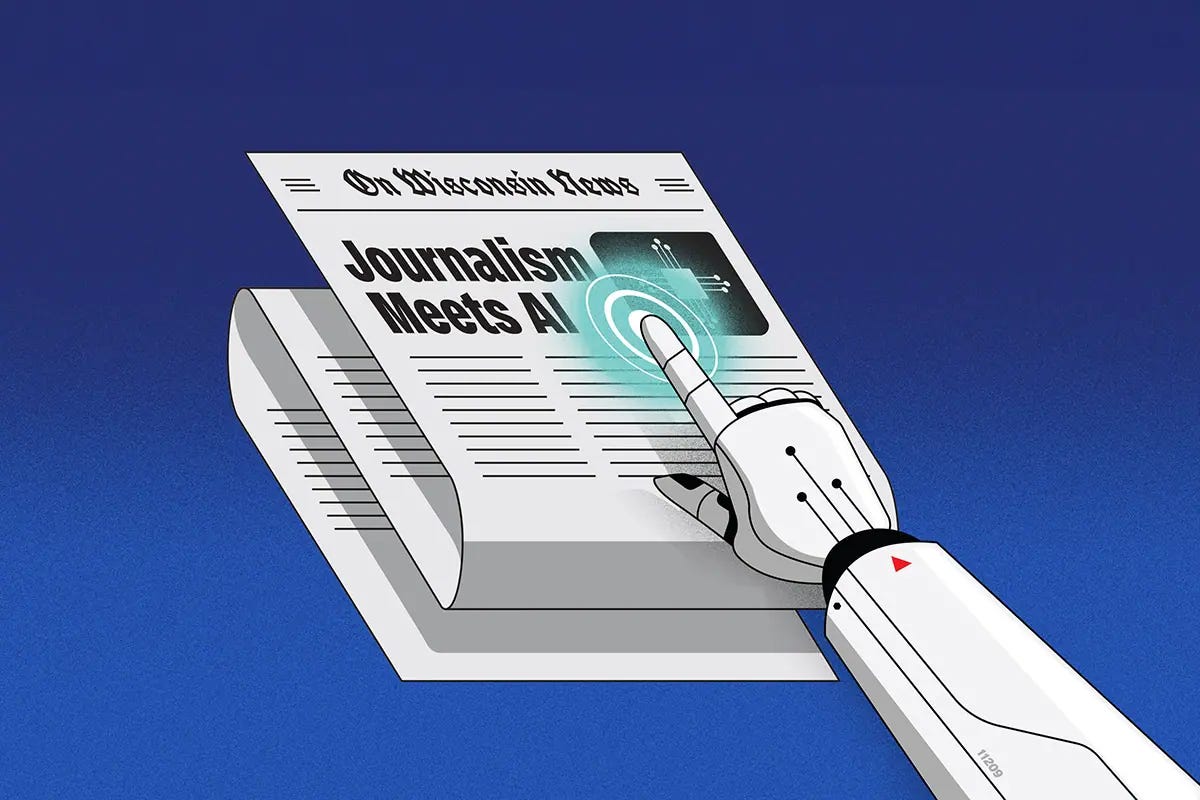
Fortunately, artificial intelligence is rapidly becoming one of the most valuable tools available to publishers. Used properly, AI is not a replacement for journalists, editors, salespeople, or publishers. Instead, it acts as a force multiplier, allowing a small team to perform the work that previously required much larger departments. Industry providers are now offering AI-powered tools that assist with publishing automation, social media distribution, editorial workflows, content creation, video production, SEO, and audience engagement.
For small news organizations facing staffing shortages, AI may be one of the most important technologies adopted during the next decade.
The Modern Publisher’s Challenge
A typical small publication today may have:
One or two editors
A handful of freelance writers
One advertising salesperson
Limited graphic design resources
No dedicated social media manager
No full-time SEO specialist
Little or no video production capability
Yet these organizations are expected to compete with larger media properties that have dozens or even hundreds of employees.
AI helps bridge this gap by automating repetitive work while allowing staff to focus on journalism, content quality, business development, and community engagement.
AI in Editorial Operations
One of the most immediate benefits of AI is improving editorial productivity.
Modern AI systems can assist with:
Article outlines
Interview question development
Research summaries
Headline generation
Grammar and style correction
Content rewriting
Fact organization
Article summarization
SEO optimization
For example, an editor covering a municipal council meeting can upload notes, transcripts, or recordings and have AI organize key discussion points into a structured draft within minutes.
Instead of spending two hours creating a first draft, reporters can spend their time verifying information, conducting additional interviews, and adding journalistic insight.
Many publishers are discovering that AI significantly reduces administrative writing tasks while allowing human journalists to focus on original reporting and investigative work. AI newsroom workflow platforms have increasingly focused on boosting productivity while maintaining editorial oversight.

AI-Powered Transcription
Transcription has historically consumed enormous amounts of newsroom time.
Consider:
Council meetings
Court proceedings
Committee meetings
Interviews
Press conferences
Podcasts
AI transcription services such as Microsoft Copilot, Otter, Fireflies, and other specialized tools can convert hours of audio into searchable text in minutes.
Benefits include:
Faster story creation
Reduced outsourcing costs
Improved accuracy
Searchable archives
Easy quote extraction
For small publications that cover local government or community events, this capability alone can save dozens of staff hours each month.
AI-Assisted Layout and Design
Magazine and newspaper production often involves repetitive page design work.
AI is increasingly being integrated into publishing platforms to assist with:
Automatic ad placement suggestions
Image cropping
Caption generation
Layout recommendations
Magazine page balancing
Visual hierarchy creation
Template generation
Programs such as Adobe InDesign now include AI-powered design assistance.
Small publications can develop standardized templates where AI helps populate:
Article placements
Pull quotes
Author bios
Related story links
Graphics suggestions
Designers still maintain final control, but production speed can increase dramatically.
Publishers producing monthly or weekly editions can reduce page assembly time while maintaining visual consistency.
AI Image Generation for Editorial Use
Many small publications struggle to source imagery for every story.
AI image generation tools can create:
Editorial illustrations
Feature article artwork
Concept images
Infographics
Historical recreations
Technical illustrations
These tools should be used responsibly and clearly labeled when appropriate.
For magazines covering technology, business, automotive, or lifestyle subjects, AI-generated images can often replace expensive custom illustration projects.
This can be particularly valuable for niche publications where stock photography options may be limited.
AI and Advertising Sales
The advertising department may be where AI provides the greatest financial impact.
Many independent publishers operate with:
One advertising salesperson
One sales manager
Limited prospecting resources
AI can dramatically improve sales productivity.
Applications include:
Prospecting
AI can help identify potential advertisers by:
Reviewing local businesses
Analyzing competitor advertising
Discovering new business openings
Identifying seasonal marketing opportunities
A salesperson can generate dozens of qualified leads in minutes.
Proposal Creation
AI can instantly create:
Media kits
Advertising proposals
Sales presentations
Campaign recommendations
Follow-up emails
This reduces hours of administrative work each week.
Ad Copy Creation
Advertising representatives can use AI to generate:
Display ad copy
Digital banner messaging
Sponsored content drafts
Promotional articles
Email campaigns
Video scripts
Instead of waiting on clients to provide copy, publishers can provide turnkey creative assistance.

CRM Automation
AI-powered CRM systems can automatically:
Schedule follow-ups
Score leads
Generate reminders
Summarize client meetings
Suggest sales opportunities
This ensures potential revenue opportunities do not fall through the cracks.
AI and Website SEO
Many publishers still struggle with search engine visibility.
AI can assist with:
Keyword research
Meta descriptions
SEO-friendly titles
Internal linking
Schema recommendations
Content gap analysis
For example, a local newspaper covering a city council meeting could optimize its article for searches such as:
“Mississauga council news”
“Port Credit development update”
“local government decisions”
Without SEO optimization, valuable reporting often remains invisible to search engines.
AI dramatically reduces the expertise required to improve search rankings.
AI-Powered Social Media Management
Social media is often neglected by small publishers because staff lack time.
AI can automate large portions of social media publishing.
Modern newsroom automation platforms can automatically generate platform-specific posts and distribute stories across social channels once content is published.
AI can create:
Facebook posts
LinkedIn updates
X posts
Instagram captions
Threads content
Newsletter teasers
Instead of manually writing six different social posts, one article can generate multiple versions automatically.
This capability alone can save several hours every day.
AI Newsletter Creation
Email newsletters remain one of the most effective tools for audience retention.
AI can automatically:
Select top stories
Write newsletter introductions
Generate subject lines
Personalize content
Create summaries
Recommend content blocks
A publication that once required several hours to assemble a newsletter can often complete the process in minutes.
AI Video Production
Video continues to grow as a major audience driver.
Historically, producing video required:
Cameras
Editors
Narrators
Graphics specialists
AI now allows publishers to convert written content into video rapidly.
New newsroom platforms can transform approved articles into narrated videos featuring captions, voiceovers, branding, and multiple language options.
Possible applications include:
Daily headlines videos
Local news briefings
Business updates
Sports summaries
Event coverage
Sponsored content
Small publishers can compete in video without building an expensive production department.
AI for Audience Analytics
Understanding readers has traditionally required dedicated analytics expertise.
AI tools can now analyze:
Most-read stories
Reader behavior
Subscription trends
Social media engagement
Content performance
Advertising effectiveness
Publishers can quickly identify:
What topics drive traffic
Which stories convert subscribers
Which advertisers generate engagement
What publication sections deserve more investment
This creates a data-driven publishing strategy instead of relying on assumptions.
AI for Subscription Growth
As advertising markets become increasingly competitive, many publications are exploring subscriptions.
AI can help by:
Predicting subscriber churn
Identifying likely subscribers
Personalizing content recommendations
Generating membership campaigns
Automating subscriber communications
Publishers can better balance advertising revenue with reader-revenue programs.
AI Customer Service
AI chatbots can provide immediate assistance for:
Subscription inquiries
Advertising information
Event registrations
Classified advertising
Contact requests
Rather than requiring staff intervention for every question, AI can answer routine inquiries 24 hours a day.

AI for Operational Efficiency
Behind the scenes, AI can streamline business operations.
Examples include:
Finance
Invoice generation
Payment reminders
Expense categorization
Human Resources
Job posting creation
Candidate screening
Employee onboarding
Administration
Meeting summaries
Policy documentation
Internal communications
Every hour saved on administration allows staff to focus on revenue-generating activities.
Developing an AI Strategy for Small Publishers
Publishers should avoid trying to implement every AI tool at once.
A phased approach works best:
Phase 1: Editorial Productivity
Start with:
AI writing assistance
Transcription tools
Grammar checking
Headline generation
Phase 2: SEO and Content Distribution
Implement:
SEO optimization tools
Newsletter automation
Social media scheduling
Phase 3: Advertising Sales
Add:
AI prospecting
CRM automation
Proposal generation
Advertising copy development
Phase 4: Video and Multimedia
Expand into:
AI video creation
Short-form social content
Podcast development
Phase 5: Analytics and Subscription Growth
Deploy:
Audience analysis
Predictive analytics
Subscriber retention tools

The Human Factor Remains Essential
Readers subscribe because they trust journalists.
Advertisers buy because they trust publishers.
Communities engage because they trust local media organizations.
The most successful newspapers and magazines in the coming years will likely be those that combine experienced journalists, strong local relationships, and AI-powered workflows. By automating repetitive tasks in editorial production, layout, sales support, marketing, SEO, social media, and audience development, even very small publishing organizations can operate with the efficiency and reach of much larger media companies.
For publishers facing limited staffing, rising costs, and increasing competition, AI is no longer an experimental technology. It is rapidly becoming an essential business tool capable of improving productivity, increasing revenue opportunities, strengthening audience engagement, and helping local journalism remain sustainable for years to come.
AI can help small publications do more with limited resources, but local knowledge and journalistic judgment must remain human-led. The strongest model will combine efficiency with trust.
AI can help small publications do more with limited resources, but local knowledge and journalistic judgment must remain human-led. The strongest model will combine efficiency with trust.