

Keywords, Rankings and SEO in a Post-Spam Update Era
The SEO landscape has entered another major transition. Following Google’s September 2026 Spam Update, website owners, publishers, marketers, and SEO professionals are once again evaluating how keywords influence rankings and what tactics still work in modern search. Google’s latest spam-focused rollout began on September 24, 2026, applies globally across all languages, and represents the fourth confirmed spam update of the year. Google stated that the rollout could take up to two weeks to complete.

While Google has not publicly disclosed the exact targets of this update, the broader direction has become increasingly clear. The search giant continues its aggressive campaign against scaled content abuse, low-value AI-generated pages, expired domain abuse, manipulative ranking tactics, and content created primarily for search engines rather than users.
For years, SEO was often associated with keyword density, exact-match phrases, and publishing large volumes of content around specific search terms. Today, that approach is becoming increasingly ineffective. Google’s SpamBrain systems and AI-powered ranking algorithms are now far better at understanding context, intent, expertise, and overall content quality. Google’s spam policies specifically identify “scaled content abuse” as the mass production of pages designed primarily to manipulate rankings regardless of whether those pages are created by humans, AI, or a combination of both.
This represents an important shift in the role of keywords. Keywords are not dead. In fact, they remain essential. What has changed is how Google interprets them. Instead of rewarding pages that repeat a phrase dozens of times, Google increasingly evaluates whether content genuinely satisfies the searcher’s intent. A page targeting “motorcycle performance upgrades,” for example, may rank well even if the precise phrase appears only a few times, provided the content demonstrates expertise, includes supporting topics, answers common questions, and provides real value.
The September 2026 update appears to reinforce this philosophy. Industry observers have reported significant volatility across websites relying on auto-generated content, thin affiliate pages, programmatic publishing, and other scaled content models. Several analyses suggest Google is continuing to strengthen enforcement around content quality while reducing visibility for pages created primarily to gain organic traffic.
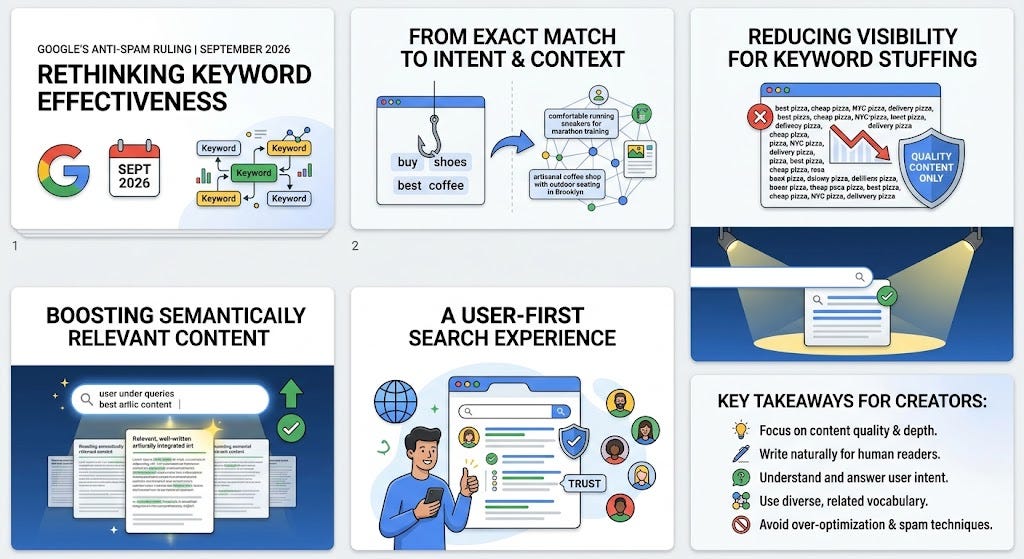
Perhaps the biggest lesson for publishers is that keyword targeting and topical authority have effectively merged. Successful websites are no longer built around isolated keywords. Instead, they are built around comprehensive topic coverage. Google’s systems analyze relationships between entities, concepts, user behavior, and overall site expertise. Rankings increasingly favor websites that demonstrate authority across an entire subject area rather than individual pages optimized for a single search phrase.
This trend is particularly relevant for local news organizations, niche publishers, and independent businesses. The old model of generating hundreds or thousands of near-identical pages targeting slight keyword variations has become significantly riskier. Google’s spam documentation specifically warns against doorway pages and scaled content tactics designed solely to capture search traffic.

At the same time, artificial intelligence has complicated the conversation. Despite widespread assumptions, Google has repeatedly stated that AI content itself is not automatically a violation of its guidelines. The issue arises when content is produced at scale without originality, expertise, or user value. Google’s focus remains on usefulness rather than the method of creation.
This distinction is important because many businesses now use AI-assisted workflows. Organizations that use AI for research, drafting, ideation, data analysis, or content enhancement can continue to perform well provided that expert oversight, editing, fact-checking, and unique insights remain part of the process. What Google appears determined to eliminate is the mass production of low-quality content designed solely to manipulate search rankings.
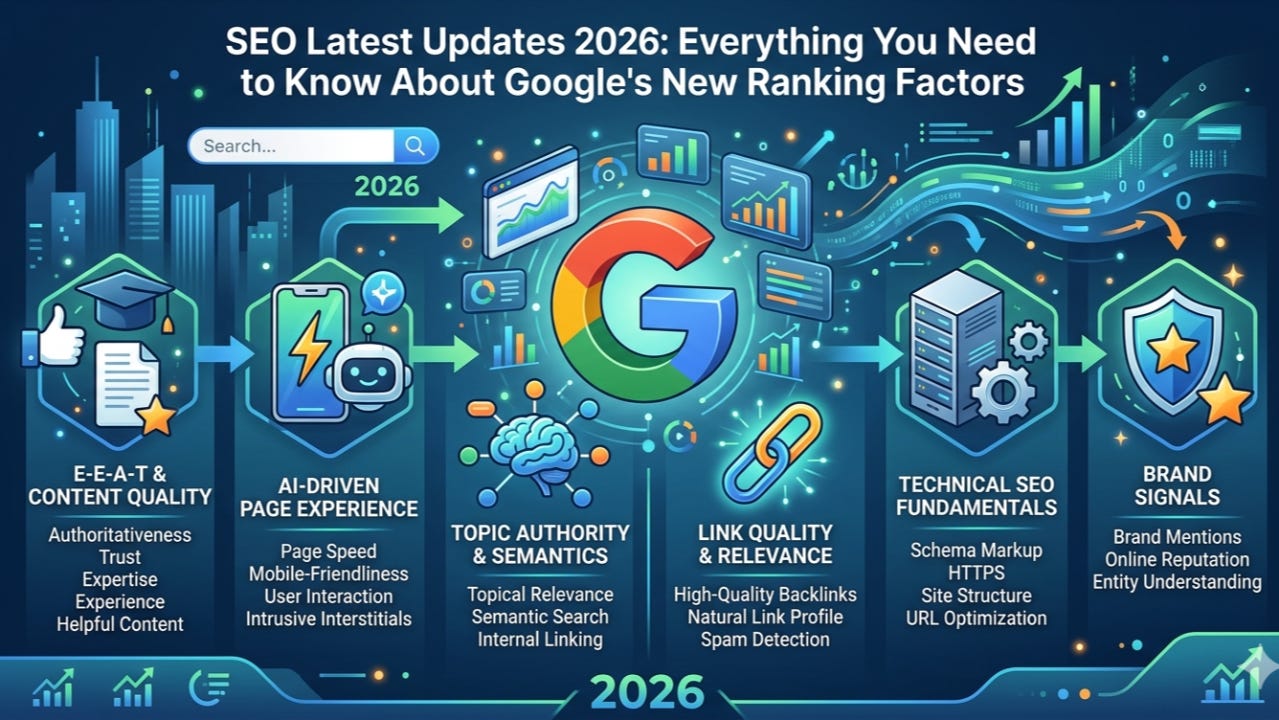
Many SEO professionals are also noticing another major evolution. Ranking success can no longer be measured exclusively through traditional search positions. Google’s AI Overviews, visual search tools, multimodal search experiences, and AI-powered answer systems are changing how users discover information. Search visibility now extends beyond ten blue links and increasingly includes citations, summaries, featured answers, images, and AI-generated responses.
For businesses, this means keyword strategy should expand into what many marketers now call “entity optimization” and “answer optimization.” Instead of asking, “What keyword should I rank for?” the better question is, “What problem am I solving, and how can I become the most trusted source on this topic?”
The websites likely to thrive after the September 2026 spam update will share several common characteristics. They will publish original content. They will demonstrate real-world expertise. They will focus on topical depth rather than page volume. They will build authentic authority rather than relying on shortcuts. Most importantly, they will prioritize the user experience over search engine manipulation.

Google’s latest spam update is not simply another algorithm adjustment. It is part of a longer-term transformation in how search understands quality. Keywords remain important as signals of relevance, but they are no longer the primary ranking weapon they once were. Authority, trust, expertise, originality, and user satisfaction increasingly drive visibility.
The message from Google is becoming unmistakable: the future of SEO belongs to publishers and businesses that create genuinely useful content. Those still relying on scale, automation, and keyword-focused manipulation may find each new spam update making recovery harder than the last. As search evolves deeper into the AI era, quality is no longer a competitive advantage. It has become the minimum requirement for ranking at all.